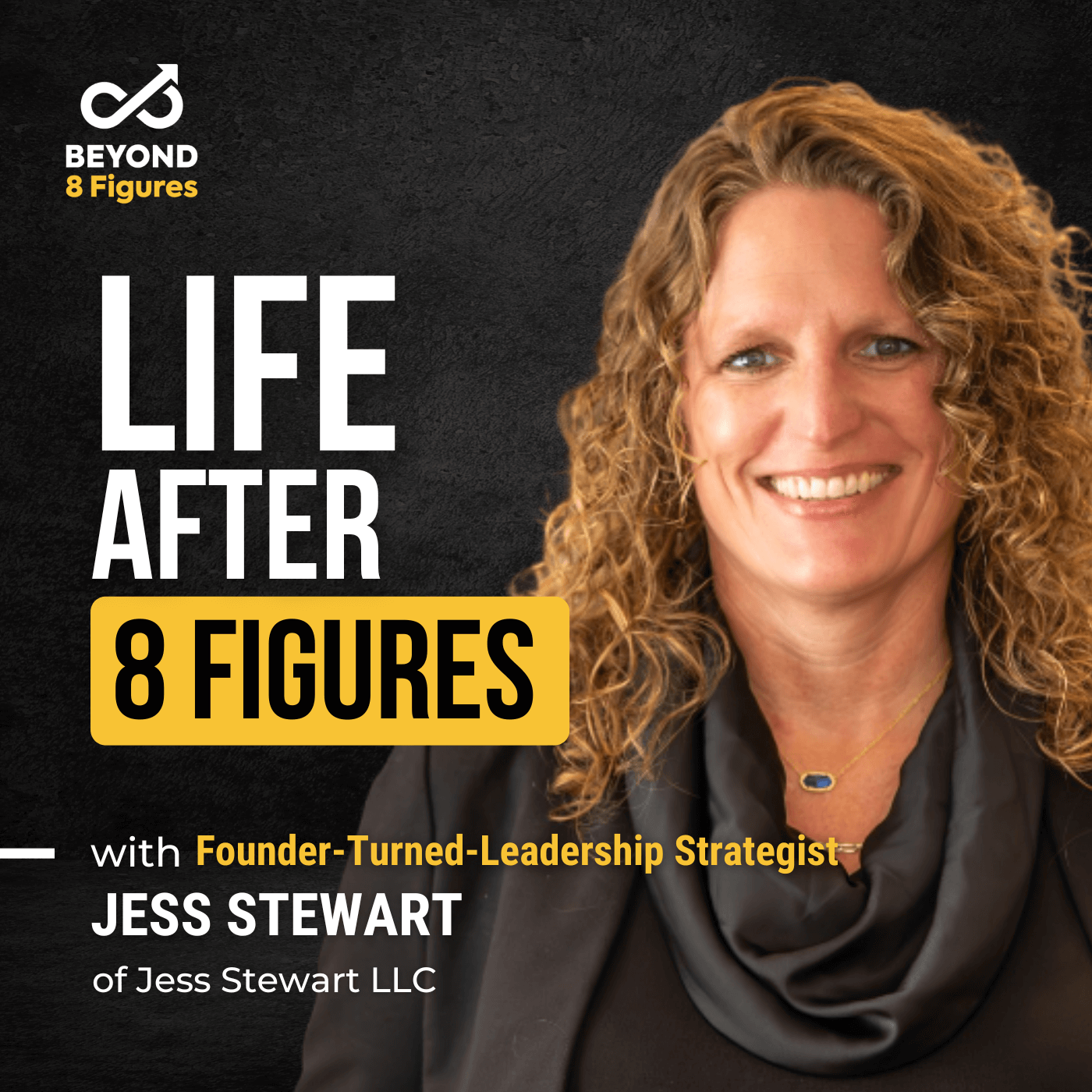
Jessica Stewart:
You bet. Honored to be here.
A.J. Lawrence:
Thank you. Well, Jessica, I really think the audience is going to love it. You have this great background. You were the CEO and founder of Pacific Medical Data Solutions. I’m going to just swear my words today. It’s not even happy hour. So you are the CEO and founder of Pacific Medical Data Solutions and you were able to exit back in 2018-19ish area as we were talking about earlier and it was such a cool company. But what you did afterwards in sort of creating the strategic business guide and the type of work you do with other entrepreneurs to help them understand and grow and deal with their issues, I think is really, really cool. Before we kind of dance around that, where do you see yourself as an entrepreneur these days?
Jessica Stewart:
A serial entrepreneur who is 100% self aware that she is a serial Entrepreneur. I think that as leaders that are born entrepreneurs, I don’t think we know that we have that passion and that drive. And let’s just admit we get our purpose from what we do until we have an exit or we have something big go on in our life where we can actually be self aware and admit that. And that happened to me when I sold. I was somebody who was grateful to sell. I had an extraordinary exit, I had an extraordinary opportunity. And I thought that, you know, I was being 41 at the time, that I was just going to ride off in the sunset and life was going to be good. I had sold enough, you know, to do that. And I soon realized not long after that I had sold that. That was absolutely not the case for me. I was not happy. I actually, like, started to have some health issues that I had never realized were a part of, you know, my life at the time. And so really, AJ what it boils down to is us getting off that hamster wheel of adrenaline of things that we do as serial entrepreneurs, creating pioneering, doing things that a lot of people don’t want to do. It’s part of us. And so when people say, you know, you get your identity, your business is your baby, I’ve let go of the shame and guilt of that because, yeah, it is, right? We worked out. We worked really hard. We brought that thing from a fledgling to what it was. We watched it graduate, we watched it go through college, we watched it go off and get married, and then we watched it leave. I have no regrets in selling my company. I think that it was great and it had such tailwind that I’m just super honored and proud as to, you know, when it sold and what it is still today, I couldn’t be more proud. But what did happen to me is that I realized that riding off into the sunset and not having something to do at 40 was something that was almost detrimental to myself and that I am a serial entrepreneur. And so now I embrace it. I embrace it with what I’m doing today. And I help other entrepreneurs do the same thing and just be self aware and talk about it. I also help other entrepreneurs talk about, you know, when you do get to a point of an exit, what are you going to do? Nobody had that. I mean, I had those types of conversations, but nobody had those really in depth conversations with me of what I went through after the acquisition. And so I love to help entrepreneurs do that today. So that’s what kind of entrepreneur I am today, I still am one. And I love it. I’ll be one for a very long time.
A.J. Lawrence:
Very cool. Yep. You know, once we get on that track, some people do go off and whatever fits, but so many of us, it’s just like it may be crazy, it may be sort of counter to what almost everyone else thinks around the world, but it is such a fulfilling journey. You and I were chatting both yesterday before I found out my child was sick, and then today, we were talking a little bit about sort of how different people look at coaching and working with one and stuff. I think it would be really cool first maybe to talk about the type of entrepreneurs you work with. And then let’s kind of go into maybe the thought process of how an entrepreneur could better position themselves to work with a coach like you. Because I’m very interested and you do some really interesting work. And I think helping entrepreneurs think about not just the value of a coach, but the work it takes on their side to be able to really work well with a coach would be worthwhile.
Jessica Stewart:
Yeah. So to your first question as to what kind of entrepreneur I work with, that varies in two levels. The highest level is what I call my full service or my private clients climbing the mountain with a full entire, you know, an entire leadership team. They’ve reached a certain point in the organization of sophistication where they have a team. They’re typically north of $5 million in revenue and they’re looking to scale or they’re having, you know, some pretty significant problems in what I call ticking points. And they reach out to. Because I can parallel a lot of my past experience, all of my past experience with where they’re at, and help them scale. So on the full service side, that’s the type of entrepreneur I work with. I wanted to be able to work with the smaller, more individual entrepreneur as well, because I have a true passion for that and I want to be able to help. And so I designed mastermind classes where I bring eight to 10 people from all over the United States in a mastermind with me. And I have it where it’s a couple hours a month on Zoom and it’s content led by me, and then we do an open forum. And so that type of entrepreneur, there isn’t necessarily a size or sophistication. I have them all, right, Ranging from ascending leaders where they’re on high level C suite teams, to entrepreneurs who are just starting to women in business. We have all different types of masterminds. And so that allows me to touch pretty much Any type of entrepreneur out there, from just getting started to a hundred million, three hundred million, you know, just, you know, you know, and all of the in between. And so what I do that’s different than most coaches is I wanted to be the person I wish I had had when I was running my company. I wish that somebody had come in and been a guide and a mentor and had been able to say, hey, I’ve climbed the mountain, I’ve been to the top, and you know, here’s how you do it and everything you’re going through is normal and, and give me some peace of mind as well as some really tangible tools on how to scale a company. And so I meet my clients, where they’re at. I’m system agnostic, let’s be real. And this is something else that Most, you know, CEOs and entrepreneurs don’t feel they can admit is that they don’t have time to go study the art of business, but they have all the pressure of the world on their shoulders that they’re supposed to know everything about business. So it’s like this huge tug of war, right? Like we’re supposed to walk into a room and know exactly how to lead teams and how to scale and do everything that we know how to do, when really we’re just the. These exceptional creators and designers and we need to surround ourselves with people who can help us do it. And so I have the time to study the art of business now. And that’s what I do. I go out and grab the best business practices that are out there. I truly believe that success leaves clues, right? Those that those that landed on top of the mountain didn’t fall there. So let’s not recreate the will. Let’s just go understand what they did. And because of my background, from founding a company out of my house and growing it by myself, meaning I didn’t have any backing of any kind to what it was, was a nationwide success, international team. I had an international team and sold very successfully, is that I can bring these practices to where the client is right at. And just by having a conversation and seeing and talking to the entrepreneur and the leader and saying, you know, talk me through where you’re at. I can bring those tools to the table and build a customized approach. And so I think that that’s the biggest difference I’ve developed my practice, and that’s why I call myself a strategic business guide, is I truly believe that every entrepreneur, CEO ascending leader, beginning entrepreneur, whatever you are, you need a coach, right? We don’t play sports without a coach. How can we be expected to go to the super bowl and be the best of the best if we don’t have that type of coaching guide? And so that’s what I designed and that’s what I developed and that’s what I’ve become. And so I’ve developed a program that is more customized and tailored to each individual client to meet them right where they’re at and help them scale.
A.J. Lawrence:
I definitely see the need for that and sort of the thought process going on in entrepreneurs because even if you don’t have the time, I’ve also realized a lot is just the amount of noise on what you should be paying attention to because you know, everyone’s selling something. So oh, you need to be doing xyz. No, you need to be doing yzm. And it’s like, oh God, you know, and it’s fun. I mean, to a certain degree it is fun. Now that I’m not 24/7 in my business, similar to you, I get to now spend time learning. But the reality is there’s so much noise. The value of a trusted guide who is spending the time to learn and understand what’s valuable and where so much of this is very high. What are some of the things that you see, entrepreneurs who are really able to take advantage of working with you or even other coaches, what did they do? Even they begin the process of a coach, like what are the questions that they’re asking? What are they looking at? How can an entrepreneur really prepare? Because I know I’ve gotten lucky with a couple of coaches in my background that I’ve worked with, but I’ve also kissed quite a few toads and I felt very scattered shot in that effort. Where would you suggest they begin?
Jessica Stewart:
So that’s a great question. It’s a two faced question. The first one for me is that we have to be self aware as an entrepreneur, right? And we have to be able to get naked a little bit. We have to be able to, you know, take those walls down and say, hey, I need help. And admitting that and being in that position is incredibly vulnerable. And so that’s what I’m looking for when people reach out to me is that we’ve reached a level of vulnerability that allows me to help them. If they haven’t reached that they aren’t ready for help. And that’s sometimes not a fit. And so just knowing that it’s okay that you’re having problems right now and even if Money’s in the bank and things are good, right? You’re still looking to go to that, that of scalability and how do you do it? Not knowing that how and you know, feeling that that gap is this big is normal. And so being able to admit that is, is first and foremost from the individual entrepreneur side. Questions that you should be asking people that you’re looking for them to come and help is one. What is their background and what is their expertise? I think that’s my biggest piece of advice is there are so many implementers and coaches and guides out there that can go and get this training. That’s great, right? That’s, that’s great. And that’s no criticism to those coaches out there. But if you really want kind of the brass tacks and the roll your sleeves up and crawl in the foxhole with you type of person, you’ve got to find somebody that has the experience so that you can have those conversations, right? Somebody who’s like in literally two sentences can say, hey, I know right where you’re at, I’ve been there. Have you considered this? And so I think looking at their background and then having the very intimate conversation and being vulnerable with that person and just seeing how they make you feel. Number two is what are their core values? What are their beliefs? Right? They’ve got to walk the walk. What does their businesses look like? So if they’re going to come in and tell you what they want you to do, well, I think their business needs to be a reflection of that as well. Asking what their core values are, you know, asking them where they’re wanting to go with their practice, what type of other clients that they work with. Referrals are, you know, references are a big piece to that. I think that that’s absolutely something that you know from the interview process you should be looking at. And then the third and final piece is after we’ve become self aware as our individuals and we realize we need help and then finding, seeking out that, you know, ideal place for us, getting rid of the sense of urgency and the guilt of, oh my God, if I don’t do this, I might not be making the right move. Come from your gut. You know, it has to feel good. You have to know and choose this guide because it’s an intimate relationship. I talk to my clients very frequently. I talk to them after hours, I talk to them on the weekends, I know their family situations. We talk on the personal level and we have to in order to scale and so just know that and then know where they’re going and how they’re going to get there. And then go with your gut. Just go with your gut.
A.J. Lawrence:
Okay, well, once they go with their gut, and hopefully have a very good conversation with you about that, where can the entrepreneur–because I think this is also something that and yes, with time, I think everyone figures it out–but I’ve noticed in my own experience and also talking to others, it’s either we overprepare and kind of start with like 50 million things when reality is you kind of fine tune it. What is really important, but then also the kind of like, well, I have a coach now. And I remember I had this one very good coach and I was really, really busy in my head with things I was doing. And I went through a couple sessions where I had him prepared and he wasn’t irritated, but like, I realized he was disappointed and it was like, ah, okay. You know, and it made me really kind of yeah, he had handled it so well. But like, what are some things an entrepreneur can do to really get the most value of working with someone like you?
Jessica Stewart:
So I think you hit first and foremost on the most important and that is you have to be willing to put in the effort. It’s not a cheap endeavor. It’s an investment into the organization. And so you have to be able to show up and do the work. And if you’re not, it’s a waste of your time and the coach’s time. I’m somebody who actually will call you out on it. I will be kind to a point, especially if I know personal, you know, life and whatnot. But my job is to push you. My job is to call out when things may be dangerous inside your organization. I’m supposed to be the one that tells you that. So if you’re not doing what you’re supposed to be doing, then let’s just call the ball here and quit wasting each other’s time. But let’s really kind of get into the meats and potatoes of it is this is what you’re doing inside your organization. And I can probably guess that you’re not happy with the situation inside your organization. I’m the reflection, right? I’m the mirror. And so if you’re not happy with it, well, you’re going to look right at the mirror here and we’re going to tell you that you’re probably one of the reasons the organization is not scaling. And so you got to show up. You have to Be willing to put the work in, and you have to be willing to listen and take those pieces that mean the most to your organization. And. And that’s aligning yourself with the coach that means the best, you know, that you aligned with originally right off the bat with the best. Because whatever he or she is saying to you, you have to be able to take and inject into your organization. And so if you aren’t aligned from the very beginning, you’re never going to be aligned. But once you get aligned and you’re getting those big pieces of information and those big tools, you got to take it back to the organization and implement it. I was on a session yesterday with a team of that I absolutely love. And I mean, they’ve listened, they’re here, they’re attentive, they’re not late, they’re on time, they’ve done the homework and they’re like putting an effort in and they’re like, hey, we’re getting results, Jess, this is great. So you have to be able to put it in to get the results, and you have to choose the guide that knows how to give you those results Needed that if you just do what is being, you know, taught and you’re being guided towards that, you’re going to have effective results.
A.J. Lawrence:
That prep work is. Yeah. And it’s funny when you say call it the reflection, that is something that really does resonate because I know in the end of the day, except for some skillsets within a coach, once you start working with coach and you really are kind of working with someone who knows what they’re doing, has been where you have, there’s also then that like, I didn’t do what I really wanted to do. It’s either the grow up, put on the big child pants and take it. Yeah, okay, I didn’t do it. And then get into the why.
Jessica Stewart:
Yeah.
A.J. Lawrence:
You know, it’s just this is taking me away from the things I need to be doing. It is very hard. Because it’s very easy to fall into. I’m so busy. I always love that the whole thing about meditation it’s like, well, hey. My life is crazy. I don’t know if I have enough time. Should I only do like really short meditation? Just like, well, you should do more. Same thing with coaching and stuff, within the structure and the limits. But it’s like sometimes when it’s not work, when things aren’t working from your efforts, it’s not that you need to do less, it’s that you probably need to do more. So yeah, I like that you kind of bring people and pushing people to keep their commitment is a really big thing. And then maybe towards that, I like that you had mentioned scaling. Scaling the mountain or scaling the peak, scaling the pinnacle, working with the overall organization. Since I just saw you recently also became a scaling up coach, and that’s an interesting company because I’ve met some people who run their organizations on scaling up and I know people, sorry if I bring up a fake religious war, but the scaling up, the EOS, you know, and I know there are other ones. That is something that’s always like I realized in hindsight I had dabbled and looked at it, but hadn’t gotten serious. And by the time I was already kind of passing the torch, when we were talking ahead of the shift, maybe quickly just how you articulate the value to your clients around identifying some operating system or some value set these type of programs provide.
Jessica Stewart:
So I’m a huge advocate of any type of operating, not any type of operations, but of an operating system or an operating platform. It is a must. It’s what was missing inside of my world, running my company until somebody walked in and said, here’s something to consider. And it changed our lives. It literally changed our lives. It was a system or a platform. And so whatever system or platform you choose, regardless, just having that structure is a great start. Now as to what type of platform it is, there’s multiple ones out there and you have to, it’s like choosing the right coach and guide. You have to choose the one that’s best for you. I have multiple certifications of different operating systems and I believe in that agnostic approach, like I said, is that I go and grab the best of the best and, and bring it into meeting the client where they’re at. And so my biggest advice is just that is find an operating system or platform that will meet you where you’re at. Scaling up for me is that. And that is why I was attracted to them, is because it allowed me to meet my clients that were just, you know, having a, you know, a startup company to mid level size, small companies to large, you know, north of $100 million companies, I can touch them. All of those clients in all of those different levels was scaling up and the tools that come with them are proven. And so the other thing that I have to say for that advice is look behind the platform, look at the leadership team inside those platforms and look at their sophistication. What type of clients are they dealing with? Are they dealing with, you know, your size clients? Are they dealing with larger clients? Are they dealing with way too small of clients? You can gauge based on that as to, you know, what type of system it fits best. Scaling up’s ability to come in and just do that is help clients scale up the mountain is what it was built for. And it’s just having a skilled guide and scaling up coach where we can go in and go, yep, they’re right here. Let’s grab this. This is where they need to go. That’s the true test. So once you choose the platform, it’s choosing the guide that goes with it.
A.J. Lawrence:
I like that. And it is maybe what I’ve heard, you know, and from conversations is just the different value sets. But one of the things that always, to me was really the most interesting was sort of the consistency understanding of where the company was going through multiple parts of the company. As an entrepreneur who never says the same thing exactly once, I have to say it 1000 times in 1001 different variations. I say things, but I think I’m saying the same exact thing and everyone is like, wait, that’s different. I’m like, no, it’s not. Okay. But back to the point, what are some of the things you see? Maybe let’s just walk through that kind of like beginning to medium to long term, not the actions, because I know there’s different types of structures or things that are done, but just more of that like, what are some of the organizational benefits you see happening as they move into these types of systems?
Jessica Stewart:
First of all is structure. Right? And I would say that 99.9% of the time, my clients don’t have some sort of system or structure inside the organization. Even though they think they do, it’s not working. That type of cadence, execution cadence is missing. And so, you know, what’s the. One of my clients actually yesterday said, the battle rhythm. What’s your battle rhythm? Right. What’s your execution cadence? And if that’s missing, that needs to be put in first and foremost. And then from there, it’s what type of tools are going to get you to think outside the box and go and grab that vision. So I think the second thing that I see is missing is from especially, you know, from any leader, and this is no criticism, because I was one of these and it was missing was the true vision. Where are you going and how are you going to get there and why are you doing it right. Answering those questions, but having a guide who can facilitate that conversation, that’s really what I do, is I facilitate conversations and get leadership teams and leaders to one, be thinking differently but to like extracting their brain. Right. It’s really hard. And it’s normal for CEOs and founders especially to not be able to articulate themselves in a way that their teens and their vendors and their clients understand. And so coming in and grabbing that and crystallizing that for them is, you know, so important. And then from there it’s just backing into how we execute on that strategy. Right. And so, you know, using the scaling up the four pillars is how you execute on that is you’ve got to have people decisions, you’ve got to have strategic decisions, you have to have execution decisions and you have to have cash. And so if you focus on those four things, once you crystallize that vision and your why you exist and how you’re going to get there, the rest just comes in that, that cadence of execution.
A.J. Lawrence:
Very cool. And I’m sorry if I’m asking sort of, I’ve stepped back and more just general questions based on your experience because like I’ve said, this is such a fascinating ongoing discussion with other entrepreneurs just around, you know, the value and the, both the eye rolling and then the, what I always call the fervent believers, you know, the people who like, will write, yeah, you ask someone and you’ll get five pages of like, oh my God, how great it is. And then you have the people like, yeah, or whatever. What do you usually feel if a company is engaged, and I know every company is going to be the same, every business model brings its own. But a hypothetical general company, since there’s so many of those, but that is engaged and is really working and really bringing this, you know, bringing the team’s effort into a process like this. What do you consider is usually the amount of time it takes to really start getting value out of it? I guess more of that. Yeah. Get a positive return on hypothetical roi.
Jessica Stewart:
So those teams that one are engaged and are scaling and it’s, you know, successful. Which is all of my clients are committed to win. Right. They have to be committed to win. If they’re not, we just stop right then and there. But for the rate of return and value, guys, if you aren’t seeing value in day one with your guiding coach, you have an issue. So session one should be you walking out going, I made the absolute Best decision. This is going to be amazing. So you should be getting Value day one. By the time the language is known, the rhythm is known, it feels good. I had a client say once, I feel like finally I know, like I’m the quarterback and I know who my defensive and offensive team is, and I’m ready to go to the Super Bowl. You know, that takes time, right? You can’t build Rome in a day. And so I would say that a year commitment to this is what it takes. And you need to be prepared for that because it’s not the guide’s problem, it’s not your problem. It’s the ability to come in and grab all of these big things, from vision to strategy, how we’re going to execute, meaning the client, where they’re at. Maybe we have some nine one ones that we have to get rid of first. Or I say hairy, squiggly things under the rocks, right? We got to grab them from under the rocks, plop them on the table and talk about them first. Maybe those have to be cleared out and then you can start your rhythm and start what I call the execution cadence. But once that is started, guys, it takes a year. It takes a year to learn the language. It takes a year to get the data of, you know, what should we be tracking that really is meaningful, right? What is going to move the needle inside the organization? What’s our secret sauce? What’s our secret ratio? That if we don’t keep these certain ratios just right, the company gets wibbly, wobbly. That takes time. That is not something that can be done in 30, 60, 90, 120 days. You’re going to have many iterations to that. And so I would think that, you know, by the time a year has rolled around, you should be feeling very, very secure. Very good. You have your rhythm, you have your language, you have your team, you have your execution cadence. You’ve got your system, right? You’re customizing system. And that’s the other thing is make sure that. Make sure you’re not just buying one program or one product out there. That’s a one size fits all. Because every organization is different. You, you’ve got to have somebody who has the skill that can bring in a customized approach. At the end of that year, you’re like, okay, this feels really good, right? This fits my company, this fits my team, you know, a year. But if you’re not getting value day one where it’s changing your life, you walk out of that first session saying, oh, I feel so much better. Even though that we might have nine one ones and scary stuff still to solve, then you need to go back.
A.J. Lawrence:
To the drawing board. Okay, cool. We’ve been talking about sort of success that other companies can get for working. How do you go about defining your own success? Not as, you know, because you jokingly said, yes, I am the business. The business is me. You know, talking about it that way, like, oh, you get it. See it go off, get married, leave the home. But how do you, as an entrepreneur, define what success is? And where do you see that success going in the future?
Jessica Stewart:
That’s a loaded question for me personally defining my success. I’ll go back, I’ll give it to you. Of where I was and where I am today. So where I was when I founded my company. I started my company with the intention of helping make a second income. We had two young kids. I started my company out of my. My house. I never intended for it to get as big as it did, but I got in there and I started realizing how much fun it was to solve problems. And I discovered that I was very, very good at solving problems. It felt good. I laid my head down at night. It was fulfilling. I was like, oh, my gosh, I could just. I was an ideator, I was a creator, I was a visionary. I was a true visionary that defined me to be successful. But there was no end timeline on it. Right. I never really just said, oh, I’m gonna. I’m gonna be done at this amount, and I’m gonna be done at this time. I did have some goals and aspirations to be semi retired by the time that I was 40, because I started my career early. But defining success for me was solving problems and being successful for my client. That really is what drove me when I ran PMDS today. Now that I’ve sold, you know, the definition of success, it took, actually people like Jim Brit and Kevin Harrington reaching out to me and saying, hey, Jess, we want you to write a chapter in our book about your story. And I was like, man, my story is just not that big a deal. Well, it was. And it was because I not only achieved what 1% of the United States tries to achieve, and that is, you know, running a. Founding a company, running a company, and then very successfully selling it and having an exit, but being a woman at the same time and being a mom, you know, was. I didn’t realize how successful that was until after the fact. And so now I get to tell my story and I get to inspire everybody out there that it’s doable. Right. It’s absolutely doable. So I summarize it with this, AJ is that I’ve struggled. I succeeded in my mind, and now I want to be significant. And so today’s definition of success for me is me being able to enter the lives of leaders like myself, like I was, like you are, and all of my clients, and being able to be significant in their life and helping them do what I did or whatever their level of, you know, their definition of success is, and being able to be a part of that, it is one of the most fulfilling things I’ve ever done. I don’t have to do what I do. I get to do what I do. And so it’s like a whole new level of success. And feeling is, go do what you love to do, because, oh, man, it’s just. It means a lot. And so that’s my definition of success today and definition of success of what it used to be. And I feel that I am continuing to succeed in that and live it every day.
A.J. Lawrence:
Cool. Well, very happy for you. I think that is one of the. Being able to live your success is probably one that greatest perks of, you know, this entrepreneurial journey. So thank you so much for sharing. How best can you know the audience if they’re thinking about, you know, if they want to learn more about you, if they want to learn more about your program, how best can they go find out information about you?
Jessica Stewart:
Yeah, absolutely. So go to our website, which is www.jess-stewart.com, and go down to the bottom and find our linktree and our LinkedIn and all of our social media, and connect to us through there. Send us a private message. Say that you were on this podcast and we would love to love to help you and love to help you, A.J. any way that we can. I think that doing some homework on the Beyond 8 Figures podcast was awesome. I think it’s a great, great podcast, and any way that we can help you as well.
A.J. Lawrence:
Well, thank you so much. I really do appreciate it. And everyone will make sure that Jess’s information will all be on the show. Notes will be in the email when this episode comes out and, of course, in our socials for this. Jess, I really, really appreciated you coming on the show. This was a lot of fun and really some great things to think about. As an entrepreneur and thinking about my own efforts and knowing a lot of what the audience goes through, really cool things to think about. So thank you so much.
Jessica Stewart:
You bet. Glad to be here.
A.J. Lawrence:
All right, everyone. Thank you so much for listening. Please, if you enjoyed the show, go to your favorite podcast listening platform of choice and give us five stars. No, give us a review. Let everyone know what you think about the show. Really, anything you say we can learn from and I would really appreciate it. It helps other entrepreneurs find the show. And look, we’re all about finding really cool entrepreneurs like Jess and the other people who had on so they can share their stories and we in the audience can just learn more to be better, more deliberate entrepreneurs ourselves. So please go, leave us a review and it’ll be greatly appreciated. All right, everyone, have a wonderful day. I’ll talk with you soon. Goodbye.